Answer-First Content vs. Traditional SEO: Which Structure Actually Gets Cited by ChatGPT, Claude, and Perplexity
Answer-first content gets cited by AI engines. Traditional SEO content, the kind that opens with a 200-word warm-up and buries the answer under an H2 called "What is X?", almost never does. The reason is mechanical: retrieval layers behind ChatGPT, Claude, and Perplexity look for a self-contained passage they can quote without stitching. If your opening paragraph is not that passage, you are not in the answer.
That is the short version. The longer version, with the scorecard we actually use, is below.
The two philosophies, side by side
Traditional SEO content is built for a crawler and a click. It targets a keyword, opens with context, works its way through a table of contents, and delivers the payoff two-thirds of the way down where a reader who scrolled that far might convert. It rewards length, depth, and internal linking.
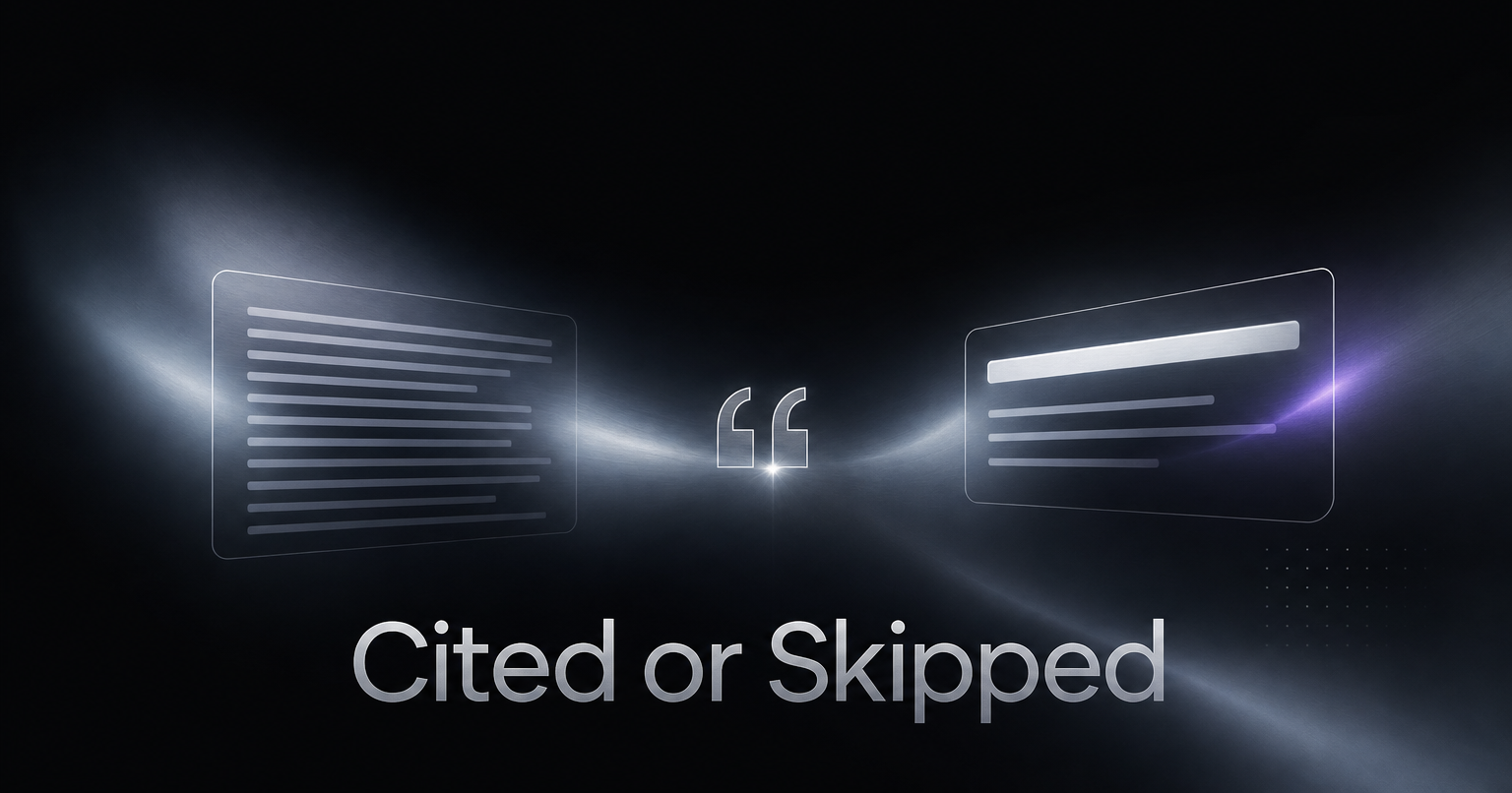
Answer-first content is built for a retrieval layer. It leads with a direct, complete answer in the first one or two sentences, uses question-shaped H2s that mirror how buyers actually phrase things to an assistant, and writes every statement so it makes sense lifted out of context. Depth still matters. It just comes after the answer, not before it.
- Opening: Traditional buries the answer under framing. Answer-first states it in sentence one.
- Headings: Traditional targets keywords ("Best CRM Tools 2026"). Answer-first mirrors questions ("Which CRM should a Series A B2B SaaS pick?").
- Sentences: Traditional strings ideas across paragraphs. Answer-first writes extractable, self-contained statements.
- Success metric: Traditional counts rankings and sessions. Answer-first counts citations and attributed revenue.
Why answer-first wins the citation, and where it does not
An engine building a response scans candidate passages for one that answers the query cleanly, on its own. A confident, specific opening sentence gets grabbed. A hedged "in today's rapidly evolving landscape" opening gets skipped for whoever wrote it plainer. That is the entire game at the passage level.
Structure is necessary but not sufficient. A brand-new domain with perfect answer-first formatting still loses to an established domain with topical depth on the same question. The lesson is not to abandon depth; it is to earn depth around a directly stated answer, not in place of one. Ship the crisp opening, then support it with the specifics, the numbers, the named example. Do both.
For a concrete walkthrough of the structural choices, our team wrote a companion piece on how to write a blog post that actually gets cited by ChatGPT or Perplexity.
How to measure the difference, honestly
This is where most teams give up. You cannot see why ChatGPT or Claude picked a source, and both often strip referrer data on the way to your site, so AI-driven visits look like direct traffic in your analytics. Rankings will not tell you. Session counts will not tell you. You need a different scorecard.
Three measurements actually separate the two structures:
- Citation share on your buyer questions. Ask the four engines (ChatGPT, Claude, Gemini, Perplexity) the exact prompts your buyers use, daily, and track how often your domain gets named versus competitors. Movement here is the earliest signal that answer-first content is landing.
- Content gap closure. Every prompt where no engine mentions you is a content gap. When you publish an answer-first post targeted at that gap and the gap closes within a few weeks, the structure worked. When it does not, the domain needs more topical depth around that cluster, not another rewrite.
- AI-attributed revenue per post. Tag AI sessions explicitly, land them on the post that earned the citation, and tie the conversion back to the exact engine and URL. This is the number that ends the argument, because it converts a structural choice into a dollar figure.
We built Clarity Search AI so a founder or new Head of Growth does not have to reconcile three dashboards to see any of this. Clark, the agent, monitors the four engines daily, writes answer-first posts against measured content gaps, and reports which engine cited which post and what it earned. Bosten Shoes ran this loop and moved from unmentioned to the number one recommended leather shoe brand in its market, with the first ChatGPT-attributed sale showing up in under 30 days.
Which one should you write?
Pick traditional SEO if your only channel is Google search and your buyers still start there. Pick answer-first if a meaningful share of your buyers now open ChatGPT or Perplexity before they type anything into Google, which, for B2B SaaS in 2026, is most of them.
The honest answer is you write answer-first and let it earn the Google rankings on the way through. A post that leads with a clean, specific answer reads better to a human, extracts cleanly for an engine, and still ranks. Traditional SEO structure does one of those three things.
Want to see whether your existing posts are structured to be cited or to be skipped? Run a free AI visibility check and start with the gap, not the guess.
Written by the Clarity Search AI team.
Is AI recommending you?
See where your brand shows up across ChatGPT, Claude, Gemini, and Perplexity, and win back the customers AI is sending to your competitors.
Check my visibility