Hiring an AI Visibility Consultant: How the AEO Space Actually Works (and What to Ask)
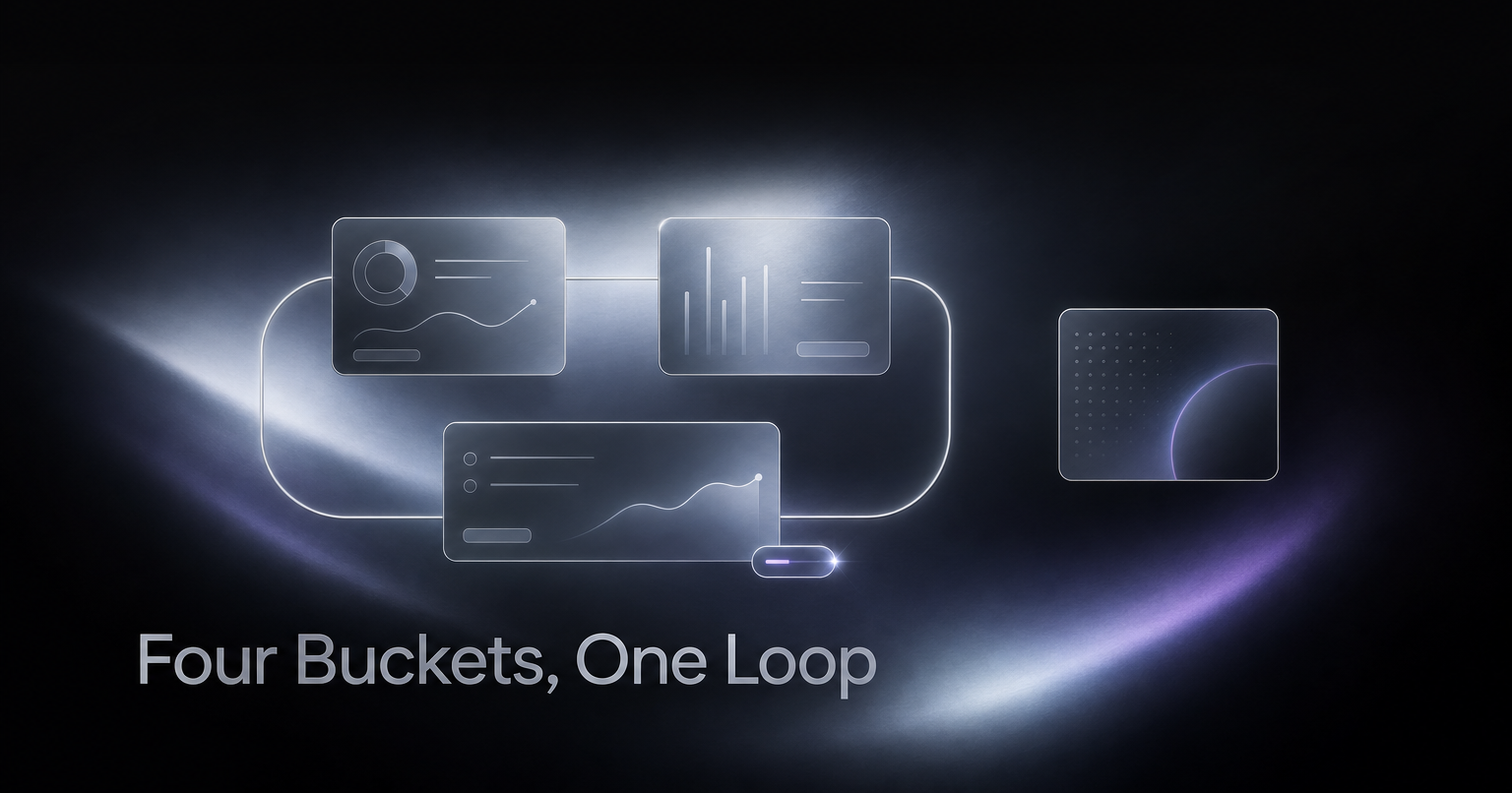
The AI visibility market splits into four kinds of work: monitoring what AI engines say about you, producing on-site content and structure so engines have something clean to quote, off-site placement in the third-party pages engines already cite, and attribution that ties AI-referred sessions to leads and revenue. Three of those four are now automatable end to end. The fourth, off-site placement, is still human, slow, and relationship-driven. Scope a consultant without knowing which bucket you are buying and you will pay retainer prices for a dashboard and a deck.
That is the whole map. The rest of this explains how the category got here and what to put in the brief.
What are the four types of AI visibility work?
Monitoring, also called prompt tracking. Run your buyers' actual questions through ChatGPT, Claude, Gemini, and Perplexity on a schedule, then record every company named, where it landed in the answer, and which sources got cited. This is commoditized. Almost every vendor sells a version, and most wrap it in a proprietary "visibility score" that cannot be audited or compared against anyone else's number.
On-site content and structure. Question-shaped pages that answer in the opening paragraph, clean crawlable HTML, entity clarity, schema, internal linking. This is where volume matters, and where human retainers get expensive fastest, because it is a per-post cost.
Off-site placement. Getting your brand into the comparison listicles, review platforms, community threads, and industry roundups the engines lean on. For "best tool for X" prompts, engines quote third-party pages far more than they quote your own site. That is why on-site content alone eventually plateaus.
Attribution. Identifying AI-driven sessions and tying them to leads, pipeline, and closed revenue. The least mature bucket, and the one most often quietly left out of scope, because it is analytics plumbing rather than marketing craft.
What changed in the last 18 months?
The category went from fringe experiment to budget line item, and the labor moved. Monitoring stopped being a research project the moment software could ask the same questions on four engines every day. Content production followed: an agent that already knows which questions you lose can write to those gaps and publish straight into a connected CMS. Attribution came last, and it is still the piece most vendors skip.
The demand side moved too. 71 percent of B2B buyers now use AI chatbots somewhere in their research, and AI search referrals have grown 527 percent year over year. So the question stopped being whether this channel matters and became who does the work and what it costs.
What did not automate is bucket three. Nobody has automated getting your product added to someone else's roundup.
So here is the honest read on a proposal you get this quarter. If a consultant is charging a monthly retainer for buckets one, two, and four, you are paying a person to operate software. If they are pitching editors, managing review profiles, and working communities, you are paying for something that genuinely cannot be bought as a subscription.
We are direct about this because it is our own boundary. Clarity does not do off-site placement, and no feature in the product does. What its agent, Clark, does instead is ask your buyers' questions verbatim on all four engines once a day, record every company named in each answer, and build a share-of-voice leaderboard so you can see exactly who keeps getting recommended in your place. Prompts where the engines never name you turn amber and become the next post's topic. That list is also the target list you hand to whoever does the off-site work.
What should you ask a vendor before you sign?
Ask these in order. The answers separate serious operators from deck builders fast.
- Which engines, how often, and do you prefix a buyer persona and location? AI answers are non-deterministic and personalized. One unprefixed prompt run once is not evidence of anything.
- Do you save the full answer text and the cited source URLs, or just a score? Saved answers are auditable. A composite score is not.
- Who writes the content, how many pieces a month, and does it publish to my CMS or arrive as drafts I have to shepherd? Assume "AI visibility strategy" excludes writing unless the contract says otherwise.
- How do you identify AI-referred sessions, and can you tie them to revenue rather than sessions? A lot of AI traffic arrives with the referrer stripped and lands in analytics as direct, which is why so much of this channel hides in your direct bucket. A report built on an unmodified analytics view undercounts, sometimes badly.
- Will you reuse the exact prompt wording so before and after are comparable? Change the question and you have thrown away the trend line.
- What happens if I leave? Do I keep the content and the monitoring history?
One red flag beats all of these: anyone who guarantees you will be named. Nobody controls model output, including us.
What does this actually cost?
Nobody in this category publishes a rate card, so treat every number you read, including the ones here, as directional and worth checking against three quotes of your own. What buyers generally report: one-off audits in the low thousands, boutique retainers in the mid four figures to low five figures a month, enterprise practices well past that, and monitoring-only tools at the bottom of the range. The gap that catches people is that the retainer often buys the dashboard and the strategy, with content billed separately per post.
For a B2B SaaS between roughly 500K and 2M in ARR, that math rarely works. You do not need a five-figure retainer to run buckets one, two, and four. You need them running continuously, and you need the revenue number, because a Head of Growth defending a new channel in a board meeting cannot do it with a mention-rate chart.
That is the position Clarity is built on: everyone shows you rank, we show you revenue. Growth is $599 a month and covers daily monitoring on ChatGPT, Claude, Gemini, and Perplexity, blog posts written and auto-published to a connected CMS (GitHub, WordPress, and Framer), full lead attribution, and auto-fix pull requests from the site audit. There is no composite visibility score anywhere in the product, deliberately, because a number we invented is not proof.
What proof looks like instead: Bosten Shoes went from unmentioned to the number-one recommended leather shoe brand in El Salvador, and Rodrigo, its founder, had a first ChatGPT-attributed sale in under 30 days. Not a score. A sale, traced back to the engine that sent it.
Before you scope anyone, get the baseline. Run a free visibility check and see which competitors get named on your buyers' questions while you do not. That result is your brief. Then decide which of the four buckets you are actually hiring for, and what it should cost.
Written by the Clarity Search AI team.
Is AI recommending you?
See where your brand shows up across ChatGPT, Claude, Gemini, and Perplexity, and win back the customers AI is sending to your competitors.
Check my visibility